About This Guide
The online groups guide is designed as a teaching series companion to foster discussion, study, and prayer, especially in a group setting.
Join a weekly group for a meaningful way to connect to our community.
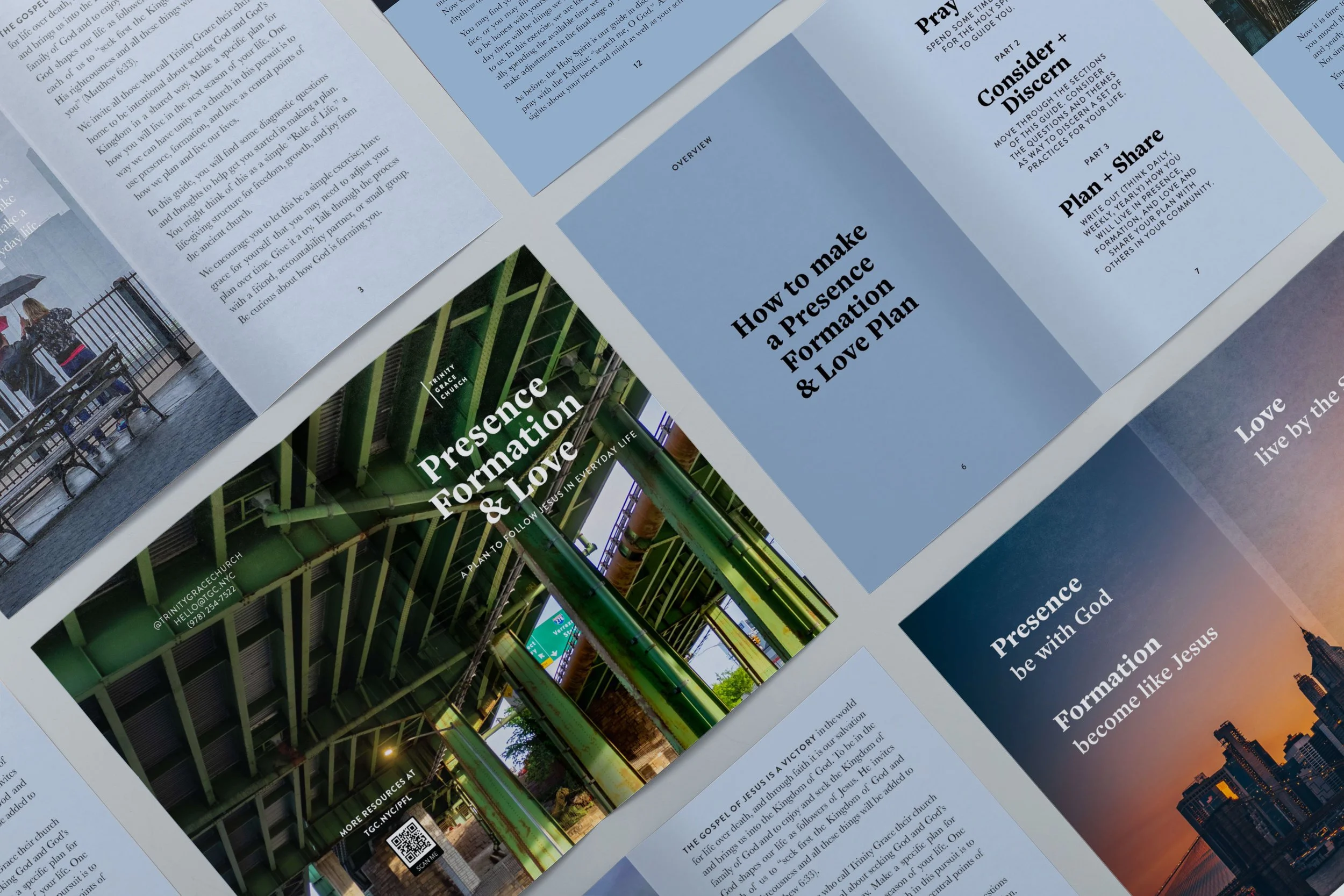
pdf download
Download this PDF to help you make a plan to follow Jesus in your everyday life, including diagnostic questions to help get you started.
Pickup a print version at our weekly in-person Sunday gatherings.

more Resources
Explore a curated online collection of recommended practices and resources to pursue presence, formation, and love in your life.
Questions about the series or looking for a way to get involved? Contact us.
Love
Teaching Text: John 3: 12–17
I have spoken to you of earthly things and you do not believe; how then will you believe if I speak of heavenly things? No one has ever gone into heaven except the one who came from heaven—the Son of Man. Just as Moses lifted up the snake in the wilderness, so the Son of Man must be lifted up, that everyone who believes may have eternal life in him.”
For God so loved the world that he gave his one and only Son, that whoever believes in him shall not perish but have eternal life. For God did not send his Son into the world to condemn the world, but to save the world through him.
1 Corinthians 2: 1–2
And so it was with me, brothers and sisters. When I came to you, I did not come with eloquence or human wisdom as I proclaimed to you the testimony about God. For I resolved to know nothing while I was with you except Jesus Christ and him crucified.
Themes
Consider these themes and ask your group what else they see in the passage:
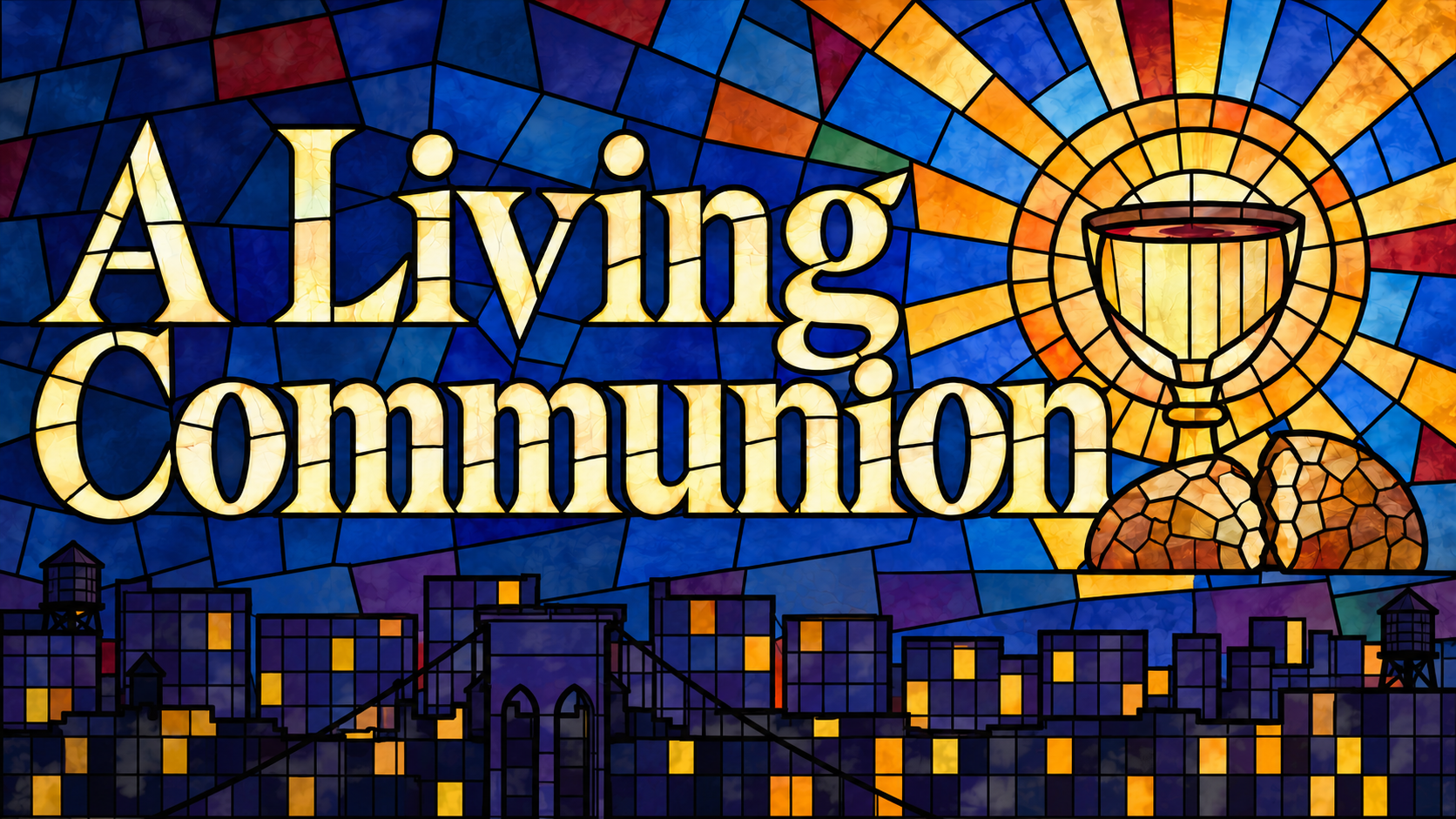
A Living Communion
The Love That Is God
Formation
Thoughts and notes you can use for discussion:
Sermon Summary
I like to imagine Nicodemus sneaking his way towards where he’d heard Jesus was staying. Scanning the street nervously. Did he try to disguise himself a little?
Many of us know that feeling. Intrigued by Jesus. Heard some things. Maybe had some experiences of God. But not exactly hoping someone from work sees us walking in.
And out of this nervous, curious conversation at night comes the most famous verse in the New Testament: John 3:16. Followed by John 3:17: God did not send His Son to condemn the world, but to save it.
What needs saving in the world? And how does God go about it?
Nicodemus asks: Who are you? Jesus goes a level under the question: No one can see the kingdom of God unless they are born again.
You are born in the natural. Then you are born of the Spirit.
The teaching text gives us three movements:
The Son of Man must be lifted up.
God so loved the world that he gave his one and only Son.
This gift is for salvation and eternal life.
We were created for communion with God. What’s broken is that we don’t live that way. We live only by human resources (water birth), not alive in God. A Living Communion is what the Kingdom of God looks like in a life. And the climactic moment of that Kingdom is Jesus lifted up: the love that is God revealed as crucified love.
“Jesus died for my sins.” True. Essential. But often heard as merely transactional. Slate wiped clean, now go try harder. Morally striving. Modifying behaviour. Grateful, maybe guilty. But living from relational distance.
Jesus says it’s about being born in an entirely new way. A way that restores communion.
Forgiveness without ongoing communion? We know from experience something’s missing.
Ways the Church has seen the Cross:
Substitution (Yom Kippur): he who knew no sin became sin for us, so we might become the righteousness of God.
Ransom (Exodus): brought out from the hold of sin, death and evil.
Recapitulation: Jesus became what we are so we could become what he is.
Christus Victor: Christ’s victory over sin and death, which we share through union with him.
Representation (Second Adam): Jesus identified with us “all the way down.”
Supreme Expression of God’s Love: a love that generates regenerative love in us, so we take up the cross and serve.
Don’t pick one. Scripture holds them all (see Scot McKnight, A Community Called Atonement). The redemption we need, and the world needs, is thorough and complete.
Colossians 2 puts several together. The Cross:
Forgives us
Cancels our legal indebtedness
Removes condemnation
Publicly disarms the powers and authorities
Wins a victory that faith gives us a share in
Much American Christianity holds a mainly courtroom vision. God lets us off the hook, and we go our way grateful. But we don’t walk in the victory. We don’t live in restored communion. We barely believe how ongoingly loved we are.
Sin is not only transgression. It’s an illness of the soul. And the gospel is for healing.
So what does this mean for your salvation?
Forgiven. Free. Victorious. Known by name. Sharing a future with God. Born of the Spirit. Able to resist what once held you captive.
And being healed. Slowly but surely. Old wounds. False identities. Crushed by shame. The Cross addresses these.
Jesus says: come and die, and live.
For you. For me. For the whole world. At every level.
And it shapes us as a community. We come to the Cross as a healing community. We go into the world in sacrificial love, laying our lives down to really receive them. For our neighbours. Dare I say, even our enemies.
The Cross is not just a legal argument, though it can be that. It’s an invitation into communion. To walk in the Garden, like the thief heard.
Broken and poured out? You’ll need the endless supply of the Holy Spirit. But friends, this is life to the full.
Direct Quotes
“The ‘kingdom of God’ is a way of talking about the restoration of creation through God’s will being done in this world in the same way that God’s will is accomplished in heaven; it is an image of how the darkness of this world could be lifted if people would turn away from—repent of—living solely for themselves and turn back to living for the God who is love. What Jesus calls the good news is his proclamation that this is beginning to come to pass, the kingdom is drawing near. It is drawing near in the words and actions of Jesus himself.”
— Frederick Bauerschmidt
“The healing and transfiguration of the human person through communion with the living God.”
— Fr. Charbe Abernethy
“Through the forgiveness of sins the gospel breaks through the compulsive acts of sinners which are the enemies of life, cutting sinners loose from sin, and creating the possibility of ‘conversion,’ a turn to life. Through the justification of sinners, the gospel brings men and women who are closed in upon themselves into the open love of God. Through rebirth from the Spirit, it brings people who have been subject to death into touch with the eternal source of life, setting them in the closer framework of the rebirth of human community and against the wider horizon of the rebirth of the cosmos.”
— Jürgen Moltmann
“The kingdom of God, in short compass, is the society in which the will of God is established to transform all of life. The kingdom of God is more than what God is doing ‘within you’ and more than God’s personal ‘dynamic presence’; it is what God is doing in this world through the community of faith for the redemptive plans of God—including what God is doing in you and me. It transforms relationship with God, with self, with others, and with the world.”
— Scot McKnight
Three Questions for Personal Application
Am I living forgiven but distant?
Have I treated the Cross as a transaction, a clean slate, and then gone back to striving on my own? Where do I feel relational distance from God, even though I believe I’m forgiven? What would it look like to come close instead of just trying harder?
Do I believe I am ongoingly loved?
Not loved once, at a moment in the past, but loved today, right now. Which old wound, false identity or shame still speaks louder than the Cross? Can I bring it to Jesus this week and let him begin to heal it, slowly but surely?
Where is Jesus inviting me to die so that I can live?
The life of communion is a poured-out life. Who is the neighbour, or even the enemy, God may be asking me to lay my life down for? And am I drawing on the Spirit’s endless supply, or running on my own resources?