February 22: Groups Guide

About This Guide

The online groups guide is designed as a teaching series companion to foster discussion, study, and prayer, especially in a group setting.

Join a weekly group for a meaningful way to connect to our community.
pdf download

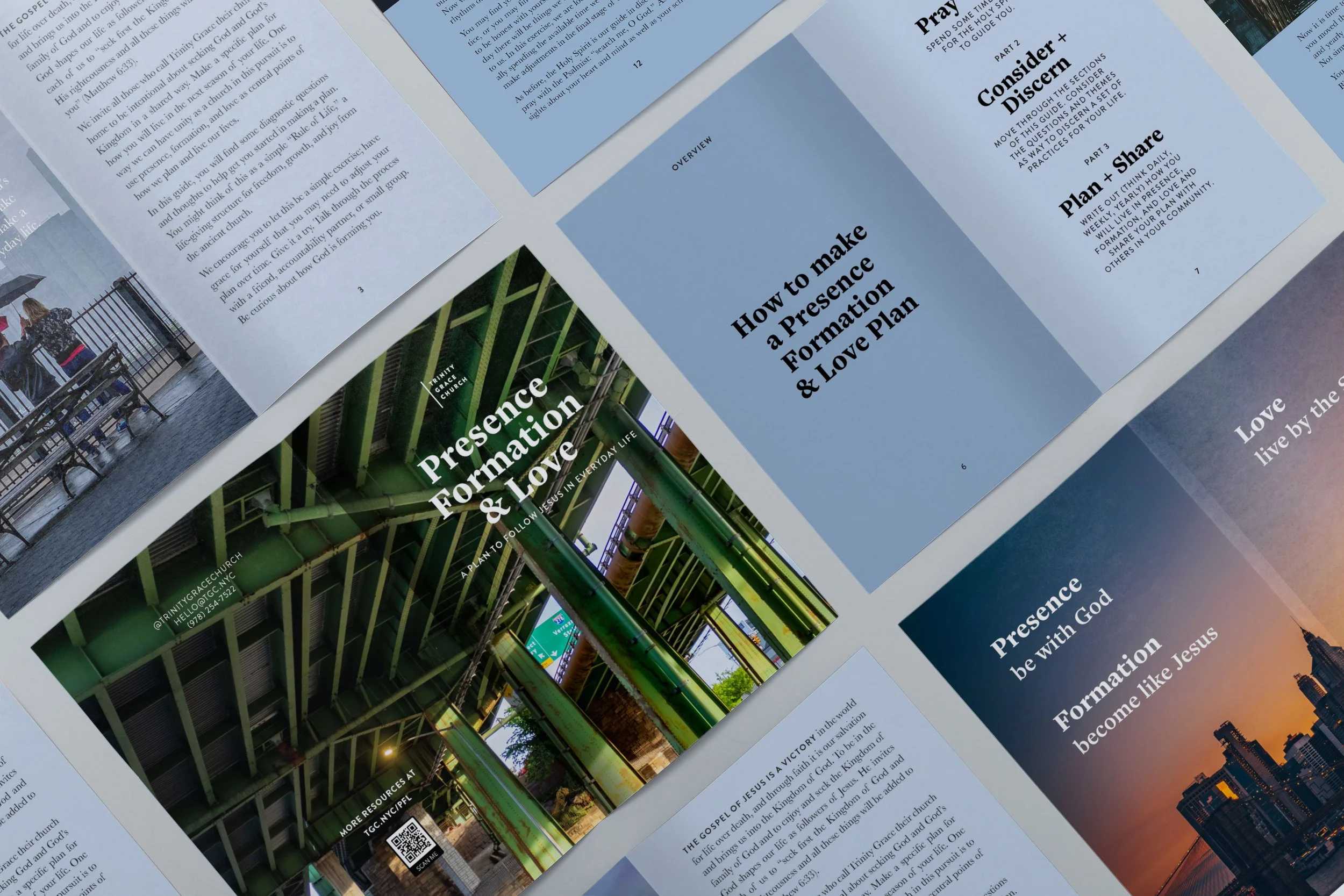
Download this PDF to help you make a plan to follow Jesus in your everyday life, including diagnostic questions to help get you started.

Pickup a print version at our weekly in-person Sunday gatherings.

more Resources

Explore a curated online collection of recommended practices and resources to pursue presence, formation, and love in your life.

Questions about the series or looking for a way to get involved? Contact us.


Love

Teaching Text: ‭Daniel 5

King Belshazzar gave a great banquet for a thousand of his nobles and drank wine with them. While Belshazzar was drinking his wine, he gave orders to bring in the gold and silver goblets that Nebuchadnezzar his father had taken from the temple in Jerusalem, so that the king and his nobles, his wives and his concubines might drink from them. So they brought in the gold goblets that had been taken from the temple of God in Jerusalem, and the king and his nobles, his wives and his concubines drank from them. As they drank the wine, they praised the gods of gold and silver, of bronze, iron, wood and stone.

Suddenly the fingers of a human hand appeared and wrote on the plaster of the wall, near the lampstand in the royal palace. The king watched the hand as it wrote. His face turned pale and he was so frightened that his legs became weak and his knees were knocking.

The king summoned the enchanters, astrologers and diviners. Then he said to these wise men of Babylon, “Whoever reads this writing and tells me what it means will be clothed in purple and have a gold chain placed around his neck, and he will be made the third highest ruler in the kingdom.”

Then all the king’s wise men came in, but they could not read the writing or tell the king what it meant. So King Belshazzar became even more terrified and his face grew more pale. His nobles were baffled.

The queen, hearing the voices of the king and his nobles, came into the banquet hall. “May the king live forever!” she said. “Don’t be alarmed! Don’t look so pale! There is a man in your kingdom who has the spirit of the holy gods in him. In the time of your father he was found to have insight and intelligence and wisdom like that of the gods.Your father, King Nebuchadnezzar, appointed him chief of the magicians, enchanters, astrologers and diviners. He did this because Daniel, whom the king called Belteshazzar, was found to have a keen mind and knowledge and understanding, and also the ability to interpret dreams, explain riddles and solve difficult problems. Call for Daniel, and he will tell you what the writing means.”

So Daniel was brought before the king, and the king said to him, “Are you Daniel, one of the exiles my father the king brought from Judah? I have heard that the spirit of the gods is in you and that you have insight, intelligence and outstanding wisdom.The wise men and enchanters were brought before me to read this writing and tell me what it means, but they could not explain it. Now I have heard that you are able to give interpretations and to solve difficult problems. If you can read this writing and tell me what it means, you will be clothed in purple and have a gold chain placed around your neck, and you will be made the third highest ruler in the kingdom.”

Then Daniel answered the king, “You may keep your gifts for yourself and give your rewards to someone else. Nevertheless, I will read the writing for the king and tell him what it means.

“Your Majesty, the Most High God gave your father Nebuchadnezzar sovereignty and greatness and glory and splendor. Because of the high position he gave him, all the nations and peoples of every language dreaded and feared him. Those the king wanted to put to death, he put to death; those he wanted to spare, he spared; those he wanted to promote, he promoted; and those he wanted to humble, he humbled.But when his heart became arrogant and hardened with pride, he was deposed from his royal throne and stripped of his glory. He was driven away from people and given the mind of an animal; he lived with the wild donkeys and ate grass like the ox; and his body was drenched with the dew of heaven, until he acknowledged that the Most High God is sovereign over all kingdoms on earth and sets over them anyone he wishes.

“But you, Belshazzar, his son, have not humbled yourself, though you knew all this.Instead, you have set yourself up against the Lord of heaven. You had the goblets from his temple brought to you, and you and your nobles, your wives and your concubines drank wine from them. You praised the gods of silver and gold, of bronze, iron, wood and stone, which cannot see or hear or understand. But you did not honor the God who holds in his hand your life and all your ways. Therefore he sent the hand that wrote the inscription.

“This is the inscription that was written:

mene, mene, tekel, parsin

“Here is what these words mean:

Mene: God has numbered the days of your reign and brought it to an end.

Tekel: You have been weighed on the scales and found wanting.

Peres: Your kingdom is divided and given to the Medes and Persians.”

Then at Belshazzar’s command, Daniel was clothed in purple, a gold chain was placed around his neck, and he was proclaimed the third highest ruler in the kingdom.

That very night Belshazzar, king of the Babylonians, was slain, and Darius the Medetook over the kingdom, at the age of sixty-two.


Themes

Consider these themes and ask your group what else they see in the passage:

  • Cry of the Prophet

  • Fasted Life


Formation 

Thoughts and notes you can use for discussion:

  • The goal of the series is to look at the voices of the prophets and their impact as those who critique from the inside. 

  • We look at the prophet as a “watchman,” whose job is to call for honesty and to stop the Israelites from relying on anything other than God 

  • Richard Rohr says,

    “In this way, they introduced a completely novel role into ancient religion: an officially licensed insider critic, a devil’s advocate who is tasked to call out and expose their own shadow side! Few cultures, if any, develop such a counterintuitive role.”

    The Tears of Things

  • Their work is sometimes labeled “Creating holy disorder” for confronting injustice and exposing abuses of power. 

  • Rohr:

    “Prophets, then, are full truth-tellers, not fortune-tellers. They pull back the veil to radically reframe our preferred storyline of history. “

  • We need this in the church because:

    • The Christian religion has sought to achieve its own innocence rather than act in solidarity with suffering and sinners.


  • “TEKEL, you have been weighed in the balances and found wanting”

    – Daniel 5:27

  • King - has a moment of being measured

    • Will you honor the truth you have been taught about God and the true story of the world?  

    • He says no…I’ll worship what I want, in fact,  I’ll use the very things that were intended to affirm God’s sovereignty and drink from them while praising the idols that I have chosen instead of God to satisfy me. 

  • But Daniel is also being measured in this moment

    • After 65 years of captivity and indoctrination - what would he do? He could be killed in this process if he tells the king the wrong thing.

    • He honors the God of his origin. He holds to the true story of the world. He calls out the king for neglecting to heed the warning of the past. 


  • Memory is an engagement with fidelity from a God who takes endless initiatives in life-transforming, life-guaranteeing actions of generosity.


  • “It is inescapable if one's past tense is burdened by self-invention and one's future tense is limited to self-sufficiency. It takes no imagination to see that technological consumerism, unable to host past miracles or future promises, has given us a present tense of greed powered by anxiety and issuing in shameless brutality against our neighbor.” 

    – Bruggeman

  • For it is only when the past is brimming with miracle and the future is inundated with fidelity that the present can be recharacterized as a place of neighborliness in which

    • Scarcity can be displaced by generosity

    • Anxiety can be displaced by confidence

    • Greed can be displaced by sharing

    • Brutality can be displaced by compassion and forgiveness


  • The recovery of the true story of the world includes the daring, pervasive conviction that God's fidelity outlasts every circumstance.


  • Daniel was able to hold onto the truth for 65 years in a hostile pluralistic environment. 

    • Honor the past (the king didn’t honor the lessons his grandfather learnt) Daniel held to the faith and devotion of his heritage

  • Trust God for the future - his fidelity will outlast every circumstance!!!!

  • Be courageous in our moment - order your life around that reality. God is faithful and will continue to be.


  • Daniel did this through forming daily life habits that immersed him in the truth. They connected him with God. 

    Here’s a practical outline for building these habits by Alice Bohn

  • A Well-Ordered Life: Practical Steps – Daniel’s prophetic clarity was the result of a life oriented toward God. We are all "ordered" toward something—the question is whether it's anxiety, money, etc, or our Creator.

  • The Purpose of Ordering

    • We reorder our lives to plug into God, our ultimate Source, and join His work in renewing all things.

  • How to Start

    • Establish habits that seek Jesus’ presence. Lent serves as a communal opportunity to audit these routines with the support of the Church.

    • The First Step: Fasting

      • Fasting reminds us of our dependence on God and creates margin for other spiritual practices. Beyond food, consider fasting from social media, late bedtimes, or digital noise.

    • Pillars of an Ordered Life

      • Prayer: Use "in-between" moments like commuting, brushing teeth, or Emmanuel Prayer at bedtime.

      • Scripture: Try a verse a day, audio Bibles during chores, or family devotions.

      • Worship: Practice "Worship Walks," gratitude lists, or daily singing.

      • Confession: Schedule weekly friend calls, spouse check-ins, or pastoral confession/counseling.

      • Service: Integrate rhythms like trash pickup, meal trains, or plugging into TGC service opportunities.

      • Obedience: Be intentional; a well-ordered life requires a plan. Tithe. 

    • We reorder our lives to live in the Presence of God. If this is daunting, start by asking God for help this Lenten season.


February 8: Groups Guide

About This Guide

The online groups guide is designed as a teaching series companion to foster discussion, study, and prayer, especially in a group setting.

Join a weekly group for a meaningful way to connect to our community.

pdf download

Download this PDF to help you make a plan to follow Jesus in your everyday life, including diagnostic questions to help get you started.

Pickup a print version at our weekly in-person Sunday gatherings.

more Resources

Explore a curated online collection of recommended practices and resources to pursue presence, formation, and love in your life.

Questions about the series or looking for a way to get involved? Contact us.


Love

Teaching Text: ‭John 1:35-51

The next day John was there again with two of his disciples. When he saw Jesus passing by, he said, “Look, the Lamb of God!”

When the two disciples heard him say this, they followed Jesus. Turning around, Jesus saw them following and asked, “What do you want?”

They said, “Rabbi” (which means “Teacher”), “where are you staying?”

“Come,” he replied, “and you will see.”

So they went and saw where he was staying, and they spent that day with him. It was about four in the afternoon.

Andrew, Simon Peter’s brother, was one of the two who heard what John had said and who had followed Jesus. The first thing Andrew did was to find his brother Simon and tell him, “We have found the Messiah” (that is, the Christ). And he brought him to Jesus.

Jesus looked at him and said, “You are Simon son of John. You will be called Cephas”(which, when translated, is Peter).

The next day Jesus decided to leave for Galilee. Finding Philip, he said to him, “Follow me.”

Philip, like Andrew and Peter, was from the town of Bethsaida. Philip found Nathanaeland told him, “We have found the one Moses wrote about in the Law, and about whom the prophets also wrote—Jesus of Nazareth, the son of Joseph.”

“Nazareth! Can anything good come from there?” Nathanael asked.

“Come and see,” said Philip.

When Jesus saw Nathanael approaching, he said of him, “Here truly is an Israelite in whom there is no deceit.”

“How do you know me?” Nathanael asked.

Jesus answered, “I saw you while you were still under the fig tree before Philip called you.”

Then Nathanael declared, “Rabbi, you are the Son of God; you are the king of Israel.”

Jesus said, “You believe because I told you I saw you under the fig tree. You will see greater things than that.” He then added, “Very truly I tell you, you will see ‘heaven open, and the angels of God ascending and descending on’ the Son of Man.”


Themes

Consider these themes and ask your group what else they see in the passage:

  • By Your Life We See Light

  • Come and See


Formation 

Thoughts and notes you can use for discussion:

  • Sometimes, we hear things at exactly the right moment.

  • This opening chapter of John's Gospel account begins with something like cosmic/meta level poetry, about Creation, about the personhood of God, about the deep questions of human philosophy, about our most ancient hopes as a human race, about Israel's prophetic expectations …

    • It's breathtaking in its scope when we really hear it.

    • The Logos became flesh and blood and skin and bone and set up a tent in our midst.

    • The Eternal Word became a person and tabernacled among us.

    • God moved on to the block. 


  • The chapter ends with what is almost like a kids’ game of telephone.

  • In 50 verses from the highest heights of divine poetry, and human thought and longing to what appears on the surface like a very pedestrian series of conversations.

    • But these brief and initially simple encounters between friends change the world because they change these lives.


  • They hear, ‘Look the Lamb of God’, right at the moment where they register the weight of what is being said and when they can walk right along follow after Jesus.


  • People come to Jesus, and they want some information. They want a little clarity on who He is or what He thinks about something, or what they should do and Jesus will say “Come and See.”

    • Or “Follow Me” or “Let’s Go”. 

  • And journey of relationship begins, a walking together begins. 


  • The Kingdom of God moves along relational lines.

    • Because God’s very nature is relational.

  • So God insists not on doing things all on His own. He insists on involving us in relationship and participation, even if as it often does, it gets messy. 

  • That meant I have chosen you to be My disciple - to live in the dust of Rabbi

  • “Follow me” was a really loaded phrase in Jewish culture at this time.


  • “Philip, like Andrew and Peter, was from the town of Bethsaida. Philip found Nathanael and told him, “We have found the one Moses wrote about in the Law, and about whom the prophets also wrote—Jesus of Nazareth, the son of Joseph.” 

    “Nazareth! Can anything good come from there?” Nathanael asked. 

    “Come and see,” said Philip. 

    • Andrew found Simon, and now Philip finds Nathanael.

    • Nathanael cracks a joke about Nazareth. And Phillip says Come and See.

  • The Kingdom of God is moving along relational lines.

    • These friends are passing on what they have received


  • One of the most joyous things as a follower of Jesus is to be able to pass on to someone else what Christ has given you. And you don’t have less for it, you have more.


  • Our world has a strong resistance to proselytizing

  • We should talk about our most deeply held beliefs.


  • There is tremendous joy in passing on what you have received from God


  • You can often tell when someone is talking about God in a way that is more about them feeling like they must say it than any concern for who hears it.

  • People talk about what they love. We pass on what is meaningful to us. 


  • “But the most obvious fact about praise -- whether of God or anything -- strangely escaped me. I thought of it in terms of compliment, approval, or the giving of honor. I had never noticed that all enjoyment spontaneously overflows into praise. ... The world rings with praise -- lovers praising their mistresses, readers their favorite poet, walkers praising the countryside, players praising their favorite game. ... I think we delight to praise what we enjoy because the praise not merely expresses but completes the enjoyment; it is its appointed consummation.”

    – C.S. Lewis

  • We praise the things we enjoy. We want others to see the good in them. 

  • We praise what we care about. 


  • When Jesus saw Nathanael approaching, He said of him, “Here truly is an Israelite in whom there is no deceit.” 

    “How do you know me?” Nathanael asked. 

    Jesus answered, “I saw you while you were still under the fig tree before Philip called you.” 

    Then Nathanael declared, “Rabbi, you are the Son of God; You are the King of Israel.” 

    Jesus said, “You believe because I told you I saw you under the fig tree. You will see greater things than that.” He then added, “Very truly I tell you, you will see ‘heaven open, and the angels of God ascending and descending on’ the Son of Man.” 

    – John 1:47-51


  • Nathanael is initially skeptical. He makes fun of Jesus’ home town. 

  • But then Jesus reveals that He knows something true about him. The smallest detail. Where he  was sitting before Philip got to him.


  • It is deeply moving to know we are seen by God.


  • The Kingdom of God moves along these relational lines.

  • We pass on what we have received

  • We tell what has happened to us.

  • Occasionally, we write it all down.

  • Sometimes we meet people who have been through something just like us and need to hear how God met us there.

  • If you’re embarrassed to identify with Jesus because some people publicly take His name in vain and attach it to things Christ has nothing to do with 

  • All the more reason we are invited to humble integrity in following Jesus.

  • We are invited to live in the dust of the Rabbi - to do what we see Jesus doing, to follow what we see Jesus teaching.


February 1: Groups Guide

About This Guide

The online groups guide is designed as a teaching series companion to foster discussion, study, and prayer, especially in a group setting.

Join a weekly group for a meaningful way to connect to our community.

pdf download

Download this PDF to help you make a plan to follow Jesus in your everyday life, including diagnostic questions to help get you started.

Pickup a print version at our weekly in-person Sunday gatherings.

more Resources

Explore a curated online collection of recommended practices and resources to pursue presence, formation, and love in your life.

Questions about the series or looking for a way to get involved? Contact us.


Love

Teaching Text:John 1:19-34

Now this was John’s testimony when the Jewish leaders in Jerusalem sent priests and Levites to ask him who he was. He did not fail to confess, but confessed freely, “I am not the Messiah.”

They asked him, “Then who are you? Are you Elijah?”

He said, “I am not.”

“Are you the Prophet?”

He answered, “No.”

Finally they said, “Who are you? Give us an answer to take back to those who sent us. What do you say about yourself?”

John replied in the words of Isaiah the prophet, “I am the voice of one calling in the wilderness, ‘Make straight the way for the Lord.’”

Now the Pharisees who had been sent questioned him, “Why then do you baptize if you are not the Messiah, nor Elijah, nor the Prophet?”

“I baptize with water,” John replied, “but among you stands one you do not know. He is the one who comes after me, the straps of whose sandals I am not worthy to untie.”

This all happened at Bethany on the other side of the Jordan, where John was baptizing.

The next day John saw Jesus coming toward him and said, “Look, the Lamb of God, who takes away the sin of the world! This is the one I meant when I said, ‘A man who comes after me has surpassed me because he was before me.’ I myself did not know him, but the reason I came baptizing with water was that he might be revealed to Israel.”

Then John gave this testimony: “I saw the Spirit come down from heaven as a dove and remain on him. And I myself did not know him, but the one who sent me to baptize with water told me, ‘The man on whom you see the Spirit come down and remain is the one who will baptize with the Holy Spirit.’ I have seen and I testify that this is God’s Chosen One.”


Themes

Consider these themes and ask your group what else they see in the passage:

  • By Your Life We See Light

  • Baptizing with the Spirit


Formation 

Thoughts and notes you can use for discussion:

  • There is light in Epiphany, even if it’s still dark pretty early.

  • There are powerful reasons for hope.

  • Sometimes we can read the Bible like a nice clean devotional book, and treat the Gospels like everyone was just curious religious thinkers walking in small groups in robes and debating ideas.

  • But - There were powerful and dark political forces at work. Jesus wasn’t executed because He carried lambs around and said love your enemies.

    • Leaders thought He was a threat.

    • And so they come looking for John because he was drawing crowds.


  • John keeps pointing away from himself and playing his part in the redemption story. 


  • The Words of the Prophet

  • The Work of the Lamb

  • The baptism of the Spirit


  • The Words of the Prophet

    • John does use a quote from the prophet Isaiah to describe what He is up to…

    • “I am the voice of one calling in the wilderness, ‘Make straight the way for the Lord.’ " 

    • Isaiah 40 in fact where the quote comes from is about Yahweh coming to His people and a highway being made for Him. John is applying that to Jesus.

  • The Work of the Lamb

    • The next day John saw Jesus coming toward him and said, “Look, the Lamb of God, who takes away the sin of the world! This is the one I meant when I said, ‘A man who comes after me has surpassed me because he was before me.’ I myself did not know him, but the reason I came baptizing with water was that he might be revealed to Israel.” 

      Then John gave this testimony: “I saw the Spirit come down from heaven as a dove and remain on him. And I myself did not know him, but the one who sent me to baptize with water told me, ‘The man on whom you see the Spirit come down and remain is the one who will baptize with the Holy Spirit.’ I have seen and I testify that this is God’s Chosen One.” 

      – John 1:29–34

    • Jesus is….

      • The Lamb of God who takes away the sin of the world

        &

      • The One who baptizes us with the Holy Spirit

        • The Lamb of God takes away the sin of the world, sets us free by dying without any sin of His own from the law written into the universe of sin and death.

    • Do you realize that? The Law of Sin and Death is as real as gravity and it not an arbitrary thing that God set up to keep people really moral and threaten them with death if they didn’t behave.

    • God is the source of life.  God is life.


  • If you part ways with God (which is what sin is) You part ways with life and death comes into the story. 

    • In big and small ways.

    • Death of trust, death of love, death of peace, death of relationships. 


  • NT Wright’s comment this is helpful …

    • “The death of Jesus takes place, in this gospel, on the afternoon when the Passover lambs were being killed in the Temple. Jesus is the true Passover lamb. John, like many New Testament writers but in his own particular way, wants us to understand the events concerning Jesus as a new, and better, Exodus story. Just as God brought the children of Israel out of Egypt, so God was now bringing a new people out of an even older and darker slavery.”


  • Maybe you are like “How can this old tribal barbaric violent way of thinking still be relevant our modern world?”

  • Friends, sin is still bringing about death. God gave His people a visceral costly picture to work with. So they could grasp what sin does to a person and community….

    • But every time forgiveness is given, someone has to absorb the cost of the wrong done.

  • Christ is saving and healing the world because He took that cost on Himself. 

  • If you want a commentary on this read Hebrews 9 and 10 but I’ll give you this one highlight…

    • “How much more, then, will the blood of Christ, who through the eternal Spirit offered himself unblemished to God, cleanse our consciences from acts that lead to death, so that we may serve the living God!” 

      Hebrews 9:14


  • The Lamb who is slain sets us free

    • And the Spirit poured out – the Spirit we are baptized with makes us alive

  • The Cross in our forgiveness, the Spirit brings our realization of it.

  • The Cross sets us free, the Spirit helps us walk in freedom.

  • The Cross in our mercy that changes our view of God and the world, the Spirit helps us walk in humility and courage.


  • Be free and be baptized by the Spirit. 


  • Whatever life we can muster on our own, it is nothing compared to life Christ is offering.

    • It is a life of freedom - where nothing ensures you

    • It is a life of union, of friendship, of fullness …


  • There’s a million ways I want the world to be different. Christ brings this new creation to our lives and says ‘You be different.”  Here is forgiveness and my Spirit. Now show up in the world in a new way.


January 11: Groups Guide

About This Guide

The online groups guide is designed as a teaching series companion to foster discussion, study, and prayer, especially in a group setting.

Join a weekly group for a meaningful way to connect to our community.

pdf download

Download this PDF to help you make a plan to follow Jesus in your everyday life, including diagnostic questions to help get you started.

Pickup a print version at our weekly in-person Sunday gatherings.

more Resources

Explore a curated online collection of recommended practices and resources to pursue presence, formation, and love in your life.

Questions about the series or looking for a way to get involved? Contact us.


Love

Teaching Text:‭John 1:1-13

In the beginning was the Word, and the Word was with God, and the Word was God.He was with God in the beginning. Through him all things were made; without him nothing was made that has been made. In him was life, and that life was the light of all mankind. The light shines in the darkness, and the darkness has not overcome it.

There was a man sent from God whose name was John. He came as a witness to testify concerning that light, so that through him all might believe. He himself was not the light; he came only as a witness to the light.

The true light that gives light to everyone was coming into the world. He was in the world, and though the world was made through him, the world did not recognize him.He came to that which was his own, but his own did not receive him. Yet to all who did receive him, to those who believed in his name, he gave the right to become children of God— children born not of natural descent, nor of human decision or a husband’s will, but born of God.


Themes

Consider these themes and ask your group what else they see in the passage:

  • By Your Life We See Light

  • True Light


Formation 

Thoughts and notes you can use for discussion:

  • The intro to gospel of John is a tremendous resource for this type of reflection. We open with it this first Sunday of Epiphany because it is such a powerful guide.


  • The true light that gives light to everyone was coming into the world. He was in the world, and though the world was made through him, the world did not recognize him. He came to that which was his own, but his own did not receive him.

– John 1:9–11 

  • Do you ever think of God as experiencing grief? That rejection impacts us profoundly, but God feels it as well? 


  • Why would God arrange a situation where God would show up in a place and not be recognized?


  • If you are watching there is plenty of God’s obvious power in what Jesus does but its not like sky writing in the clouds so everyone can read.

    • Instead he goes small first, shows up in weakness initially, hyper local, specific. Relational.


  • In the beginning - we are clued in right away that whatever he is doing he is harkening back to the original creation story.


  • NT Wright has a helpful comment on the connection to Genesis…

  • Whatever else John is going to tell us, he wants us to see his book as the story of God and the world, not just the story of one character in one place and time. This book is about the creator God acting in a new way within his much-loved creation. It is about the way in which the long story which began in Genesis reached the climax the creator had always intended.

– NT Wright


  • John is telling us using the opening lines of of Torah (of Genesis) that God has made and is remaking the world. 

  • And the way that is happening is for God to show up in person.

  • He is telling us that nothing in the natural world was created without relationship - without through-ness. 

  • Creation was not a lonely endeavor.


  • John is saying there is a light that is a light to whole human race.

  • There is a true light that gives light to everyone and it has come into the world.

    • And no matter where you have started in life, whatever your life is up to this point, you can be Born of God.

  • The reality of God’s life can be born in your life. This is something more than just a  new idea in your head about God.


  • This is a transformation where what is true about God’s life begins to fill your life.

    • The light, the love, the perspective, the future of God becomes yours to share in.

  • This passage says it hinges of our part on recognition and reception.


  • He was in the world, and though the world was made through him, the world did not recognize him. He came to that which was his own, but his own did not receive him. Yet to all who did receive him, to those who believed in his name, he gave the right to become children of God

John 1:10–12

  • We recognize Jesus - this word made flesh 

  • We receive him 

  • We become family - born of God

  • So lets ask ourselves…

    • How do you recognize Jesus?

  • In this text, in your life, on a Wednesday, in your goal setting and resolutions, in your budget, on the F train, at your life group, at Monday night English language conversations, in the news?

  • How do we recognize Jesus the first time or the millionth time?


  • Ask for help to recognize Jesus

  • How do you receive Jesus?

  • Trust that he is who he says he is

  • Believe in his name. - In means Yahweh saves.

  • Sit with him, eat with him, speak to you him, trust his guidance.


  • Be born of God - are you living like someone born of God? Like family?

  • What is animating your daily life?

  • What is guiding your discernment? decision making?

  • Are you led by love?

  • By the Holy Spirit. Pray for the filling of the Holy Spirit


  • Recognize Him

  • Receive Him

  • Be family


December 14: Groups Guide

About This Guide

The online groups guide is designed as a teaching series companion to foster discussion, study, and prayer, especially in a group setting.

Join a weekly group for a meaningful way to connect to our community.

pdf download

Download this PDF to help you make a plan to follow Jesus in your everyday life, including diagnostic questions to help get you started.

Pickup a print version at our weekly in-person Sunday gatherings.

more Resources

Explore a curated online collection of recommended practices and resources to pursue presence, formation, and love in your life.

Questions about the series or looking for a way to get involved? Contact us.


Love

Teaching Text:‭Luke 1: 5-38

In the time of Herod king of Judea there was a priest named Zechariah, who belonged to the priestly division of Abijah; his wife Elizabeth was also a descendant of Aaron. Both of them were righteous in the sight of God, observing all the Lord’s commands and decrees blamelessly. But they were childless because Elizabeth was not able to conceive, and they were both very old.

Once when Zechariah’s division was on duty and he was serving as priest before God, he was chosen by lot, according to the custom of the priesthood, to go into the temple of the Lord and burn incense. And when the time for the burning of incense came, all the assembled worshipers were praying outside.

Then an angel of the Lord appeared to him, standing at the right side of the altar of incense. When Zechariah saw him, he was startled and was gripped with fear. But the angel said to him: “Do not be afraid, Zechariah; your prayer has been heard. Your wife Elizabeth will bear you a son, and you are to call him John. He will be a joy and delight to you, and many will rejoice because of his birth, for he will be great in the sight of the Lord. He is never to take wine or other fermented drink, and he will be filled with the Holy Spirit even before he is born. He will bring back many of the people of Israel to the Lord their God. And he will go on before the Lord, in the spirit and power of Elijah, to turn the hearts of the parents to their children and the disobedient to the wisdom of the righteous—to make ready a people prepared for the Lord.”

Zechariah asked the angel, “How can I be sure of this? I am an old man and my wife is well along in years.”

The angel said to him, “I am Gabriel. I stand in the presence of God, and I have been sent to speak to you and to tell you this good news. And now you will be silent and not able to speak until the day this happens, because you did not believe my words, which will come true at their appointed time.”

Meanwhile, the people were waiting for Zechariah and wondering why he stayed so long in the temple. When he came out, he could not speak to them. They realized he had seen a vision in the temple, for he kept making signs to them but remained unable to speak.

When his time of service was completed, he returned home. After this his wife Elizabeth became pregnant and for five months remained in seclusion. “The Lord has done this for me,” she said. “In these days he has shown his favor and taken away my disgrace among the people.”

In the sixth month of Elizabeth’s pregnancy, God sent the angel Gabriel to Nazareth,a town in Galilee, to a virgin pledged to be married to a man named Joseph, a descendant of David. The virgin’s name was Mary. The angel went to her and said, “Greetings, you who are highly favored! The Lord is with you.”

Mary was greatly troubled at his words and wondered what kind of greeting this might be. But the angel said to her, “Do not be afraid, Mary; you have found favor with God. You will conceive and give birth to a son, and you are to call him Jesus. He will be great and will be called the Son of the Most High. The Lord God will give him the throne of his father David, and he will reign over Jacob’s descendants forever; his kingdom will never end.”

“How will this be,” Mary asked the angel, “since I am a virgin?”

The angel answered, “The Holy Spirit will come on you, and the power of the Most High will overshadow you. So the holy one to be born will be called the Son of God.Even Elizabeth your relative is going to have a child in her old age, and she who was said to be unable to conceive is in her sixth month. For no word from God will ever fail.”

“I am the Lord’s servant,” Mary answered. “May your word to me be fulfilled.” Then the angel left her.


Themes

Consider these themes and ask your group what else they see in the passage:

  • Watching for the Light

  • PEACE: See a light—God's unchanging Character Across the Ages

  • Series Intro: 

    • God is near

    • God is saving and rescuing

    • God is filling and healing.

    • But that can be confusing or disillusioning because life has quite a lot of waiting, some real season is difficultly, loss, grief. Life has what feels like delays. It has uncertainty, pain, and longing.

    • And so we need the darkness of Advent also.  We need the wilderness and waste places of Lent, we need the confused grief of Holy Saturday when Christ has died but we see no sign of resurrection.


Formation 

Thoughts and notes you can use for discussion:

  • Types of Silence

    • Silence of despair

      • Sometimes suffering can make us forget, and that moment of forgetting is despair.  It is the moment we forget that God is a God who hears the cry of his children.

      • And in the story of the Hebrew/Israelites: hope was a groan and a cry 

      • If your silence with God is one of despair, then it is time to cry out.

    • Silence of shame/unacknowledged sin

      • When I kept silent, my bones wasted away through my groaning all day long. For day and night your hand was heavy on me; my strength was sapped as in the heat of summer. Then I acknowledged my sin to you and did not cover up my iniquity. I said, “I will confess my transgressions to the Lord.” And you forgave the guilt of my sin.

        – Psalms‬ ‭32‬:‭3‬-‭5‬ ‭NIV‬‬

      • Jeremiah 31:3 : “I have loved you with an everlasting love;

        I have drawn you with unfailing kindness.

      • The hope of Advent is a God who is coming all the way to you. All we have to do is not hide

    • Silence of awe

      • The silence of awe is also present in the advent story at the birth of Jesus.  The shepherds who heard the announcement of the angels and who saw the newborn Jesus, shared with their neighbors what they had seen and heard.

      • Luke writes in his gospel:

        And all who heard it were amazed at what the shepherds said to them.

        – Luke 2:18

      • The ESV better here it says: “And awe came upon every soul…”

      • Awe is our most reasonable response to the presence of the trinitarian God or to witnessing the direct activity of God in the world.


  • Tyler Staton: “Fear of the Lord is the willed choice to give my attention to God—to listen to the story He tells about who I am, who He is and where we’re going together—and then live in a contested world of competing fears like God is in fact the only one telling the truth.”


  • Are you building your life on God’s faithfulness?  Do you believe the story He is telling in the world? Because if you do, if you can live in the fear of the Lord, then you can experience what I will call the silence of trust.


  • Moses answered the people, “Do not be afraid. Stand firm and you will see the deliverance the Lord will bring you today. The Egyptians you see today you will never see again. The Lord will fight for you; you need only to be still.”

    – Exodus‬ ‭14‬:‭13‬-‭14‬ NIV

  • ESV renders it: you need only be silent.


  • The enemy you fear no longer has any power over you (fear of death, fear of failure, fear of abandonment). You just need to be still. Stand in the place where you are (keep worshipping, keep serving, keep living into the Messiah’s picture of human flourishing)--stand firm and see the salvation of the Lord.


INVITATIONS

  • Perhaps we need silence to determine what kind of silence we are in. When the quiet comes and you’re alone, what are the thoughts that comes? Are they of love, trust, hope? Are they of fear, shame?


  • Sometimes I don't know what my thoughts are toward God until I’m alone with them. I need to be still first. And sometimes that’s when the trembling truth comes: I’m angry with you. I’m disappointed that you let this happen. Or sometimes: thank you, I love you. And sometimes quiet: just being together. And I imagine a hand on my chest. A face next to mine. Ah, there you are. I’ve been waiting.  Let’s go on our walk.


November 30: Groups Guide

About This Guide

The online groups guide is designed as a teaching series companion to foster discussion, study, and prayer, especially in a group setting.

Join a weekly group for a meaningful way to connect to our community.

pdf download

Download this PDF to help you make a plan to follow Jesus in your everyday life, including diagnostic questions to help get you started.

Pickup a print version at our weekly in-person Sunday gatherings.

more Resources

Explore a curated online collection of recommended practices and resources to pursue presence, formation, and love in your life.

Questions about the series or looking for a way to get involved? Contact us.


Love

Teaching Text:‭Isaiah 9:1–7

Nevertheless, there will be no more gloom for those who were in distress. In the past he humbled the land of Zebulun and the land of Naphtali, but in the future he will honor Galilee of the nations, by the Way of the Sea, beyond the Jordan—

The people walking in darkness
    have seen a great light;
on those living in the land of deep darkness
    a light has dawned.
You have enlarged the nation
    and increased their joy;
they rejoice before you
    as people rejoice at the harvest,
as warriors rejoice
    when dividing the plunder.
For as in the day of Midian’s defeat,
    you have shattered
the yoke that burdens them,
    the bar across their shoulders,
    the rod of their oppressor.
Every warrior’s boot used in battle
    and every garment rolled in blood
will be destined for burning,
    will be fuel for the fire.
For to us a child is born,
    to us a son is given,
    and the government will be on his shoulders.
And he will be called
    Wonderful Counselor, Mighty God,
    Everlasting Father, Prince of Peace.
Of the greatness of his government and peace
    there will be no end.
He will reign on David’s throne
    and over his kingdom,
establishing and upholding it
    with justice and righteousness
    from that time on and forever.
The zeal of the Lord Almighty
    will accomplish this.


Themes

Consider these themes and ask your group what else they see in the passage:

  • Watching for the Light

  • PEACE: See a light—God's unchanging Character Across the Ages

  • Series Intro: 

    • God is near

    • God is saving and rescuing

    • God is filling and healing.

    • But that can be confusing or disillusioning because life has quite a lot of waiting, some real season is difficultly, loss, grief. Life has what feels like delays. It has uncertainty, pain, and longing.

    • And so we need the darkness of Advent also.  We need the wilderness and waste places of Lent, we need the confused grief of Holy Saturday when Christ has died but we see no sign of resurrection.


Formation 

Thoughts and notes you can use for discussion:

  • A poem of shalom

  • This poem says – The character of God is reliable

  • King Ahaz was looking for assurance and hope. Isaiah brings him a poem. 

  • This seems very unhelpful in the trenches of every day real life tragedy and challenge. 


  • Ahaz wants to be helped but also wants to remain in control. 

  • Surrender wasn't an option for him. 


  • He ultimately asks Assyria for help and they end up overcoming Judah. 


  • For to us a child is born, 

    to us a son is given, 

    and the government will be on his shoulders. 

    And he will be called 

    Wonderful Counselor, Mighty God, 

    Everlasting Father, Prince of Peace. 

    Of the greatness of his government and peace 

    there will be no end. 

    – Isaiah 9: 6–7.  


  • Wonderful Counselor - the One wise enough to give wisdom that may not look like the world 

  • Mighty God - the One strong enough to effect change for real 

  • Everlasting Father - the One ready to call us family forever 

  • Prince of Peace - the One who inherits and distributes shalom 


  • The character of God is revealed.

    • Counselor, Strength, Father, Peace

    • This poem is what God is passionate about….

      • The zeal of the LORD Almighty 

        will accomplish this. 

        – Isaiah 9: 7


  • In the Christian story God descends to reascend. He comes down; down from the heights of absolute being into time and space, down into humanity; down further still, if embryologists are right, to recapitulate in the womb ancient and pre-human phases of life; down to the very roots and seabed of the Nature He has created. But He goes down to come up again and bring the whole ruined world up with Him. One has a picture of a strong man stooping lower and lower to get himself underneath some great complicated burden. He must stoop in order to lift, he must almost disappear under the load before he incredibly straightens his back and marches off with the whole mass swaying on his shoulders.

    – C.S. Lewis


  • Advent is about learning to trust in the promises of God when circumstances seem to contradict hope. 

  • When we are faced with evidence of dark broken realities in life, we have the character of God to trust in. 

    • Name your needs and dark moments. 

    • Then think about the character of God and pray for Him to help you trust in His Nature instead of looking at the darkness. 

    • Look for ways this week where God is inviting you to trust and hope. 


  • We look to other things so we can control our circumstances without any relational obligation.

    • Maybe I find myself in a spot where I want God’s power but not God, I am in a troubling spot. 

    • God says “you cannot control Me, but I have shown you My love for you.” 


  • Learning in love to trust the promise…

    …those who hope in the Lord 

    will renew their strength. 

    They will soar on wings like eagles; 

    they will run and not grow weary, 

    they will walk and not be faint. 

    – Isaiah 40: 31


November 30: Groups Guide

About This Guide

The online groups guide is designed as a teaching series companion to foster discussion, study, and prayer, especially in a group setting.

Join a weekly group for a meaningful way to connect to our community.

pdf download

Download this PDF to help you make a plan to follow Jesus in your everyday life, including diagnostic questions to help get you started.

Pickup a print version at our weekly in-person Sunday gatherings.

more Resources

Explore a curated online collection of recommended practices and resources to pursue presence, formation, and love in your life.

Questions about the series or looking for a way to get involved? Contact us.


Love

Teaching Text: ‭‭Jeremiah 32: 1–17

This is the word that came to Jeremiah from the Lord in the tenth year of Zedekiah king of Judah, which was the eighteenth year of Nebuchadnezzar. The army of the king of Babylon was then besieging Jerusalem, and Jeremiah the prophet was confined in the courtyard of the guard in the royal palace of Judah.

Now Zedekiah king of Judah had imprisoned him there, saying, “Why do you prophesy as you do? You say, ‘This is what the Lord says: I am about to give this city into the hands of the king of Babylon, and he will capture it. Zedekiah king of Judah will not escape the Babylonians but will certainly be given into the hands of the king of Babylon, and will speak with him face to face and see him with his own eyes. He will take Zedekiah to Babylon, where he will remain until I deal with him, declares the Lord. If you fight against the Babylonians, you will not succeed.’”

Jeremiah said, “The word of the Lord came to me: Hanamel son of Shallum your uncle is going to come to you and say, ‘Buy my field at Anathoth, because as nearest relative it is your right and duty to buy it.’

“Then, just as the Lord had said, my cousin Hanamel came to me in the courtyard of the guard and said, ‘Buy my field at Anathoth in the territory of Benjamin. Since it is your right to redeem it and possess it, buy it for yourself.’

“I knew that this was the word of the Lord; so I bought the field at Anathoth from my cousin Hanamel and weighed out for him seventeen shekels of silver. I signed and sealed the deed, had it witnessed, and weighed out the silver on the scales. I took the deed of purchase—the sealed copy containing the terms and conditions, as well as the unsealed copy— and I gave this deed to Baruch son of Neriah, the son of Mahseiah, in the presence of my cousin Hanamel and of the witnesses who had signed the deed and of all the Jews sitting in the courtyard of the guard.

“In their presence I gave Baruch these instructions: ‘This is what the Lord Almighty, the God of Israel, says: Take these documents, both the sealed and unsealed copies of the deed of purchase, and put them in a clay jar so they will last a long time. For this is what the Lord Almighty, the God of Israel, says: Houses, fields and vineyards will again be bought in this land.’

“After I had given the deed of purchase to Baruch son of Neriah, I prayed to the Lord:

“Ah, Sovereign Lord, you have made the heavens and the earth by your great power and outstretched arm. Nothing is too hard for you.


Themes

Consider these themes and ask your group what else they see in the passage:

  • Watching for the Light

  • Hope: Buy a Field - Holding Onto Promise Against Incredible Odds

  • Series Intro: 

    • God is near

    • God is saving and rescuing

    • God is filling and healing.

    • But that can be confusing or disillusioning because life has quite a lot of waiting, some real season is difficultly, loss, grief. Life has what feels like delays. It has uncertainty, pain, and longing.

    • And so we need the darkness of Advent also.  We need the wilderness and waste places of Lent, we need the confused grief of Holy Saturday when Christ has died but we see no sign of resurrection.


Formation 

Thoughts and notes you can use for discussion:

  • Jeremiah

    • God tells him to buy a field in the land that is falling. The place where the enemy is currently camped, besieging the city.

      • In the midst of the city falling.

      • In the middle of the death of a dream.

      • In the chaos of defeat.

      • God says houses, fields, and vineyards will be bought again in this land.

      • Judgement, death, and defeat will not have the last word.

        • Mercy will. Salvation will. Renewal will.


  • Hope-determined actions participate in the future God is bringing into being. These acts are rarely spectacular. Usually they take place outside sacred settings. Almost never are they perceived to be significant by bystanders. It is not easy to act in hope because most of the immediate evidence is against it.

    – Eugene Peterson


  • And God invited him to a demonstration and participation in hope. 

  • And he put the record of that absurd hope into jars of clay. I hope the bells are ringing in your heart.

    • But we have this treasure in jars of clay to show that this all-surpassing power is from God and not from us. We are hard pressed on every side, but not crushed; perplexed, but not in despair; persecuted, but not abandoned; struck down, but not destroyed. We always carry around in our body the death of Jesus, so that the life of Jesus may also be revealed in our body.

    • – 2 Corinthians 4: 7–10

      • You are the record of this hope.

      • You carry the deposit.


  • What fields are you buying?

  • Where are you sinking resources into hope in God's promises?

  • What are the places of darkness and defeat in your life right now? 

  • What are the hope-determined actions you can do in the midst of the darkness? 


November 16: Groups Guide

About This Guide

The online groups guide is designed as a teaching series companion to foster discussion, study, and prayer, especially in a group setting.

Join a weekly group for a meaningful way to connect to our community.

pdf download

Download this PDF to help you make a plan to follow Jesus in your everyday life, including diagnostic questions to help get you started.

Pickup a print version at our weekly in-person Sunday gatherings.

more Resources

Explore a curated online collection of recommended practices and resources to pursue presence, formation, and love in your life.

Questions about the series or looking for a way to get involved? Contact us.


Love

Teaching Text: 1 Corinthians 15: 1-11

Now, brothers and sisters, I want to remind you of the gospel I preached to you,which you received and on which you have taken your stand. By this gospel you are saved, if you hold firmly to the word I preached to you. Otherwise, you have believed in vain.

For what I received I passed on to you as of first importance: that Christ died for our sins according to the Scriptures, that he was buried, that he was raised on the third day according to the Scriptures, and that he appeared to Cephas, and then to the Twelve. After that, he appeared to more than five hundred of the brothers and sisters at the same time, most of whom are still living, though some have fallen asleep. Then he appeared to James, then to all the apostles, and last of all he appeared to me also,as to one abnormally born.

For I am the least of the apostles and do not even deserve to be called an apostle, because I persecuted the church of God. But by the grace of God I am what I am, and his grace to me was not without effect. No, I worked harder than all of them—yet not I, but the grace of God that was with me. Whether, then, it is I or they, this is what we preach, and this is what you believed.


Themes

Consider these themes and ask your group what else they see in the passage:

  • Built Up in love

  • Equipped to be Ambassadors of Reconciliation

  • Series Intro: 

    • So Christ himself gave the apostles, the prophets, the evangelists, the pastors and teachers, to equip his people for works of service, so that the body of Christ may be built up until we all reach unity in the faith and in the knowledge of the Son of God and become mature, attaining to the whole measure of the fullness of Christ. 

      Then we will no longer be infants, tossed back and forth by the waves, and blown here and there by every wind of teaching and by the cunning and craftiness of people in their deceitful scheming. Instead, speaking the truth in love, we will grow to become in every respect the mature body of him who is the head, that is, Christ.

      From him the whole body, joined and held together by every supporting ligament, grows and builds itself up in love, as each part does its work. 

      – Ephesians 4:11–16

    • The Kingdom of God is most accurately represented when all the saints are equipped and participating in the mission of God to love show his love to our world. 

    • The word EQUIP was used to refer to… 

      • THE SETTING OF A BROKEN BONE - things are are broken in our lives being healed.

      • THE TEACHING OF A SOLDIER TO FIGHT - to be made ready of for struggle of life and the way of love in Christ by the Spirit 

      • THE SUPPLY OF WHAT IS NEEDED FOR ALONG JOURNEY - that we would have what is need for the long journey of life 

      • THE RESTORATION OF SOMETHING TO ITS ORIGINAL CONDITION - maybe its been worn out, beaten down, damaged, and it gets restored to like new…


Formation 

Thoughts and notes you can use for discussion:

  • “But so that we may not cause offense, go to the lake and throw out your line. Take the first fish you catch; open its mouth and you will find a four-drachma coin. Take it and give it to them for my tax and yours.” 

    – Matthew 17: 27


  • In this story, Jesus is a son of the house and seems to think He is not subject to the house tax, but He pays it anyway.

  • So Jesus is paying something for someone else that He doesn’t owe to take away the offense.

  • But the thread goes deeper. 

    • In the biblical cosmology, the waters represent chaos. An undoing. Death. Fear. 

    • The waters were seen as place of unruly chaos and fear.

    • And Peter is told to pull a fish out of the chaos. And inside the fish’s mouth he will find coins that are exactly what he needs.

  • Order out of chaos. Provision Out of fear.

  • Order out of chaos. Provision out of fear. Abundance out of scarcity. 


  • God is a storyteller.

    • Not first an idea sharer.

    • Not first a budgeteer or sin accountant 

    • Not a ted talk giver.

    • Not a ruler maker.

    • God is a storyteller.

  • “In every experience of beauty we are being prepared for eternity.”

    – Martin Shaw


  • When we reduce the Gospel down to a set of controllable propositions meant mostly to help you escape life into heaven one day - we do the story a bit a disservice.

  • The Gospel of Jesus is a story of abundance in a world or scarcity. 


  • We live in a world of reduction

    • We live in particular moment of history that has squeezed to drain the wonder out of the world.

  • But it is recoverable.


  • Identity is something that is more and more primarily understood as difference. Identity is to be different than whatever that you are in reference to. 

  • Identity is defined in some sense by what you are rebelling against.

  • You can trace this in our culture in so many ways.


  • Christianity is an ontological structure - a way to understand the world. A way to understand reality


  • “To believe in the supernatural is not simply to believe that after living a successful, material, and fairly virtuous life here one will continue to exist in the best-possible substitute for this world, or that after living a starved and stunted life here one will be compensated with all the good things one has gone without:  It is to believe that the supernatural is the greatest reality here and now.”

    – T.S. Elliot


  • We have the best story. 

    • It’s not a machine.

    • It’s not a marketing scheme,

    • It’s a body made alive with love.

    • It’s story passing through darkness back into light 

    • It is resurrection from the dead.


  • I want to invite us to recapture our confidence in Christ.

    • As our Savior and as the story of the whole world.

  • We pass on what we have received … Listen ….

    • Now, brothers and sisters, I want to remind you of the gospel I preached to you, which you received and on which you have taken your stand. By this gospel you are saved, if you hold firmly to the word I preached to you. Otherwise, you have believed in vain. 

      For what I received I passed on to you as of first importance: that Christ died for our sins according to the Scriptures, that he was buried, that he was raised on the third day according to the Scriptures, and that he appeared to Cephas, i and then to the Twelve. After that, he appeared to more than five hundred of the brothers and sisters at the same time, most of whom are still living, though some have fallen asleep. Then he appeared to James, then to all the apostles, and last of all he appeared to me also, as to one abnormally born. 

      – 1 Corinthians 15: 1-8


  • We have a Storytelling God. We are a Storytelling People 

  • You are equipped to live and speak the good news …

    • Honesty and Curiosity

      • Tell people what you believe and listen for what they believe 

    • Make and Celebrate Beauty

      • Get the stories in our you heart and mouth 

      • Make beautiful things

      • Pottery, a dinner table, a collage, a workspace, a hospital

    • Power of Invitation

      • learn the power of invitation  

    • Love in Action 

      • The Gospel has no credibility when we are selfish power grabbing photocopies of our culture 

      • Love lights the way. It points to the nature of God

    • Know the Story


  • Remember the grace of God adds people to the story - grace is the change agent