Pentecost

May 31: Groups Guide

About This Guide

The online groups guide is designed as a teaching series companion to foster discussion, study, and prayer, especially in a group setting.

Join a weekly group for a meaningful way to connect to our community.
pdf download

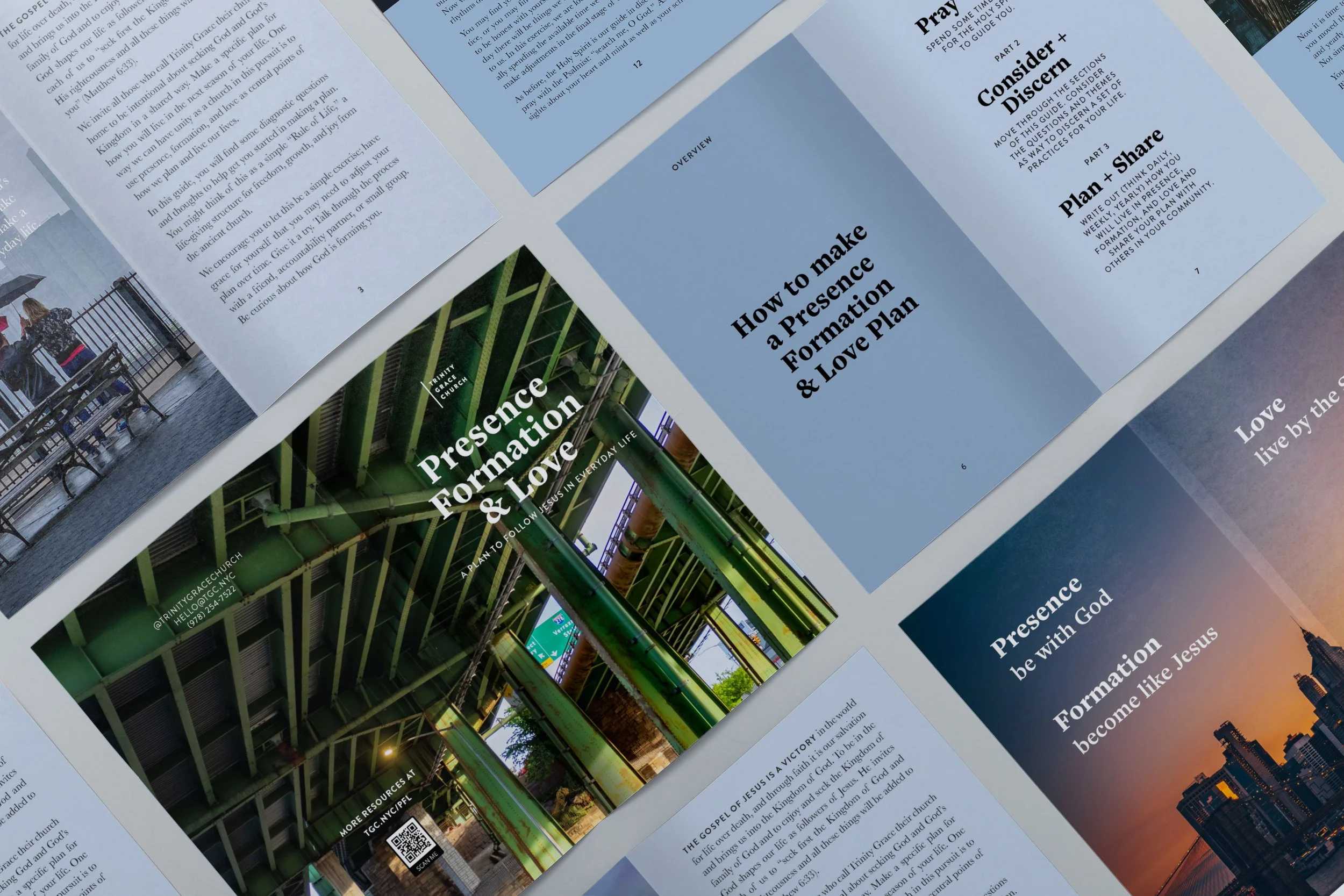
Download this PDF to help you make a plan to follow Jesus in your everyday life, including diagnostic questions to help get you started.

Pickup a print version at our weekly in-person Sunday gatherings.

more Resources

Explore a curated online collection of recommended practices and resources to pursue presence, formation, and love in your life.

Questions about the series or looking for a way to get involved? Contact us.


Love

Teaching Text: Hebrews 4:14–5:10

Therefore, since we have a great high priest who has ascended into heaven, Jesus the Son of God, let us hold firmly to the faith we profess. For we do not have a high priest who is unable to empathize with our weaknesses, but we have one who has been tempted in every way, just as we are—yet he did not sin. Let us then approachGod’s throne of grace with confidence, so that we may receive mercy and find grace to help us in our time of need.

Every high priest is selected from among the people and is appointed to represent the people in matters related to God, to offer gifts and sacrifices for sins. He is able to deal gently with those who are ignorant and are going astray, since he himself is subject to weakness. This is why he has to offer sacrifices for his own sins, as well as for the sins of the people. And no one takes this honor on himself, but he receives it when called by God, just as Aaron was.

In the same way, Christ did not take on himself the glory of becoming a high priest.But God said to him,

“You are my Son;
    today I have become your Father.”

And he says in another place,

“You are a priest forever,
    in the order of Melchizedek.”

During the days of Jesus’ life on earth, he offered up prayers and petitions with fervent cries and tears to the one who could save him from death, and he was heardbecause of his reverent submission. Son though he was, he learned obedience from what he suffered and, once made perfect, he became the source of eternal salvation for all who obey him and was designated by God to be high priest in the order of Melchizedek.


Themes

Consider these themes and ask your group what else they see in the passage:

  • Hebrews

  • The Priest Who Gets It


Formation 

Thoughts and notes you can use for discussion:

Sermon Summary

  • Story about Oscar: “Oscar had gone to several pastors and asked them to teach him to pray. They all gave different and not very satisfying answers… I’ve never forgotten his longing to be taught how to pray and feeling lost.”

  • We live in a world of unreliable guides. In peacetime, it doesn’t feel like it matters much — intuition, Google, life hacks, friends’ best guesses. But when life is in deep conflict, profound grief, buried in shame or anxiety — what guides us then takes on different proportions.

  • This passage puts Jesus forward as a priest. Not just any priest.

    • The highest, fullest, most complete Priest.

    • The forever priest — no beginning, no end.

    • The priest who is also a King.

    • The priest accessible to everyone who calls.

    • The priest who never fails to guide.

  • And the author has one of the strangest moments in world history in mind: the Garden of Gethsemane.

    “During the days of Jesus’ life on earth, he offered up prayers and petitions with fervent cries and tears to the one who could save him from death, and he was heard because of his reverent submission. Son though he was, he learned obedience from what he suffered and, once made perfect, he became the source of eternal salvation for all who obey him.”

    — Hebrews 5:7–9

  • Two strange things in this description of Jesus.

    • First: Jesus prayed in fervent cries and tears — asking God to let the cup pass — and the prayer was not answered in the affirmative. Yet we’re told he was heard.

    • Second: “Once made perfect.” This isn’t moral perfection — he had no sin. Scholar Kathleen Norris helps:

      “The word that has been translated as ‘perfect’ does not mean to set forth an impossible goal… It is taken from a Latin word meaning complete, entire, full-grown… ‘Perfection, in a Christian sense, means becoming mature enough to give ourself to others… mature, ripe, full, ready for what befalls us.’”

      Kathleen Norris

  • Before the Cross, God was a rescuer. In the Garden and on the Cross, we see something more complete: God as suffering servant. God absorbing the cost of all the world’s brokenness. Jesus lived this full revelation — and a large part of it was his suffering.

  • He knows what it is to have a dark night of the soul. To face terror and anxiety. To ache in his gut. To feel the silence of heaven.

  • This changes everything — in at least three directions:

    • On temptation. Jesus has been tempted in every way we are. Appetites of the body. Ambition and status. The hunger for approval. He faced the archetypes. And he shows us: it is possible to hang on to the promises of God through them. When you are tempted, bring your temptation before the compassion of Jesus.

    • On prayer. We approach the throne of grace with confidence — not because of our achievements or how early we got up or how many words we said. We come boldly because Jesus himself walks us into the holiest place. To pray in Jesus’ name is not a ritual closing line. It’s to pray through his sonship — and to realize that sonship makes us sons and daughters. God is never diminished by listening to your prayers. He never needs to regroup. He neither slumbers nor sleeps.

    • On forgiveness. What we receive in our time of need is mercy and grace. Mercy: forgiven without earning it. Grace: power to live a different way. The expression of this in a life is repentance. The Gospel says God forgives us because of the Cross — and fills us with the resurrected life of Jesus by the Spirit.

  • The High Priest is making us priests ourselves. A priesthood of all believers.

  • This book is written to Oscars. To those about to give up. Pressed. Suffering. Challenged.

  • It is Pentecost. Ask God to make Jesus your High Priest alive and present to you by the Holy Spirit.

Direct Quotes

  • “For me, prayer is an impulse of the heart, it is a simple glance turned toward heaven, it is a cry of recognition and love in the midst of trial as well as joy; finally, it is something great, supernatural, which expands my soul and unites me to Jesus.”

    — Thérèse of Lisieux

    “Prayer, Thérèse knows, is a dangerous business. Because it draws us into the reality of God, it also draws us into the pain and suffering of the world that God loves and, if we let it, stretches and even tears our souls so we can love the world in the way that God does.”

    — Frederick Bauerschmidt, The Love that is God

Three Questions for Personal Application

  1. Where are you most desperately in need of a reliable guide right now? Think about the areas of your life where you’ve been making do with substitutes — intuition, advice from friends, the path of least resistance. What would it look like to bring that specific need before Jesus as your High Priest this week? What would it mean to actually trust that he gets it?

  2. How does knowing that Jesus prayed in fervent cries and tears — and felt the silence — change how you pray? It’s easy to assume that bold, confident prayer means prayer that feels good. But Thérèse kept praying through profound darkness. Where have you pulled back from God in prayer because it felt one-sided or unheard? What might it look like to keep going anyway?

  3. In what area of your life do you most need mercy — and in what area do you most need grace? Mercy is forgiveness you can’t earn. Grace is power to live differently. They’re related but distinct. Sit with both. Where is the weight of guilt or failure heaviest right now? And where are you trying to change in your own strength, without leaning into the life of the Spirit?

“Let us then approach God’s throne of grace with confidence, so that we may receive mercy and find grace to help us in our time of need.” — Hebrews 4:16


May 24: Groups Guide

About This Guide

The online groups guide is designed as a teaching series companion to foster discussion, study, and prayer, especially in a group setting.

Join a weekly group for a meaningful way to connect to our community.

pdf download

Download this PDF to help you make a plan to follow Jesus in your everyday life, including diagnostic questions to help get you started.

Pickup a print version at our weekly in-person Sunday gatherings.

more Resources

Explore a curated online collection of recommended practices and resources to pursue presence, formation, and love in your life.

Questions about the series or looking for a way to get involved? Contact us.


Love

Teaching Text: Hebrews 4:1-13

Therefore, since the promise of entering his rest still stands, let us be careful that none of you be found to have fallen short of it. For we also have had the good news proclaimed to us, just as they did; but the message they heard was of no value to them, because they did not share the faith of those who obeyed.Now we who have believed enter that rest, just as God has said,

“So I declared on oath in my anger,
    ‘They shall never enter my rest.’”

And yet his works have been finished since the creation of the world. For somewhere he has spoken about the seventh day in these words: “On the seventh day God rested from all his works.” And again in the passage above he says, “They shall never enter my rest.”

Therefore since it still remains for some to enter that rest, and since those who formerly had the good news proclaimed to them did not go in because of their disobedience, God again set a certain day, calling it “Today.” This he did when a long time later he spoke through David, as in the passage already quoted:

“Today, if you hear his voice,
    do not harden your hearts.”

For if Joshua had given them rest, God would not have spoken later about another day. There remains, then, a Sabbath-rest for the people of God; for anyone who enters God’s rest also rests from their works, just as God did from his. Let us, therefore, make every effort to enter that rest, so that no one will perish by following their example of disobedience.

For the word of God is alive and active. Sharper than any double-edged sword,it penetrates even to dividing soul and spirit, joints and marrow; it judges the thoughts and attitudes of the heart. Nothing in all creation is hidden from God’s sight. Everything is uncovered and laid bare before the eyes of him to whom we must give account.


Themes

Consider these themes and ask your group what else they see in the passage:

  • Hebrews

  • Enter His Rest


Formation 

Thoughts and notes you can use for discussion:

Sermon Summary

  • EB White on New York City’s restless, sleepless energy — 

    • “There are roughly three New Yorks. There is, first, the New York of the man or woman who was born there, who takes the city for granted and accepts its size, its turbulence as natural and inevitable. Second, there is the New York of the commuter — the city that is devoured by locusts each day and spat out each night. Third, there is New York of the person who was born somewhere else and came to New York in quest of something.”

      — E.B. White, Here is New York

  • It is possible to live with peace and identity intact in such a place? 

  • The book of Hebrews answers with a surprising promise: God’s plan includes a people who enter His rest. That rest is not passivity or boredom, but the very rest of God Himself — offered to us.

  • The word “rest” in Hebrews 4 carries at least three layers of meaning: 

    • (1) The Sabbath rest God took after creation and invited humanity into from the first day; 

    • (2) The rest of entering the Promised Land under Joshua (Yeshua); and 

    • (3) A future, eternal rest — the unshakeable Kingdom, the new heavens and new earth, the full transformation of creation in which we are called to participate.

  • In Genesis 1–2, humanity’s very first day is a day of rest — they begin from completion, not striving. In Genesis 15, God makes a covenant with Abraham in a startling way: Abraham falls asleep and God alone passes through the divided animals twice, bearing the cost of both sides of the covenant. This foreshadows the gospel — we cannot keep our end, but God walks the blood path for us. In the Exodus, Israel repeatedly fails to trust and an entire generation dies in the wilderness. 

  • The Promised Land is only a partial picture. Prophets like Jeremiah point forward to a new covenant written on the heart.

  • Hebrews 4 culminates in a striking image: the Word of God is “sharper than any double-edged sword,” and the Greek word trachēlizō — translated “laid bare” — means to grab an animal by the neck to expose it for sacrifice. 

  • But this same Word has itself been laid bare, hung naked on the cross as the ultimate sacrifice. 

  • Jesus (Yeshua) is the one who finally leads us into rest — not merely by example, but by becoming the Passover lamb. Fifty days later, on Pentecost, the living Word filled his followers with the Holy Spirit — the down-payment of the Kingdom that cannot be shaken.

  • Invitation: to enter God’s rest is to come through the curtain of Jesus — laying down both sin and self-achievement — and to receive the very life of God in the soul. Being a Christian is not a set of organised beliefs; it is the active experience of God’s love filling and transforming us. We are called not merely to believe, but to be filled with the Spirit — again and again.

Direct Quotes

  • “For the believers, the final, ultimate goal of this life is eternal life in the world to come or the unshakeable kingdom of God or heavenly home, which is the same as the future city. Most today speak of this final goal as heaven, which it is, but the popular idea of heaven tends to be an immaterial world of spirits and songs rather than the new heavens and new earth coming down to earth. The ultimate goal is about the transformation of all creation, and we are called to participate in the transformation that has already begun.”

    — Scot McKnight

  • “Let anyone who is thirsty come to me and drink. Whoever believes in me, as Scripture has said, rivers of living water will flow from within them.”

    — Jesus, John 7:37–38

  • “Being a Christian is not having a certain set of thoughts organised in your mind about God. It is the active experience of God loving you to death and back.”

  • — Sermon

Three Questions for Personal Application

  1. Where in your life are you striving to earn rest — through performance, productivity, or achievement — rather than receiving it as a gift from God?

    The sermon reminds us that in Genesis, humanity’s very first day was a Sabbath — they began from rest, not from work. Reflect on what it would mean to start from a place of being loved and complete in God, rather than working toward it.

  2. In what areas are you most tempted to “wrench back control” — to operate out of anxiety rather than trust, or worry rather than worship?

    Israel repeatedly failed to trust God’s provision in the wilderness. Where are you meeting your deepest needs out of your own resources instead of surrendering to God? What would it look like, in that specific area, to rest in His faithfulness today?

  3. Is your faith primarily a set of beliefs about God, or are you actively experiencing the filling of God’s Spirit in your daily life?

    Our closing challenge is that we are called not just to believe, but to be filled — again and again. What might you lay down — shame, or self-sufficiency — to receive more of God’s life? Are there practices or postures that would help you remain open to the Spirit’s active presence?

“There remains, then, a Sabbath-rest for the people of God.” — Hebrews 4:9


June 15: Groups Guide

About This Guide

The online groups guide is designed as a teaching series companion to foster discussion, study, and prayer, especially in a group setting.

Join a weekly group for a meaningful way to connect to our community.

pdf download

Download this PDF to help you make a plan to follow Jesus in your everyday life, including diagnostic questions to help get you started.

Pickup a print version at our weekly in-person Sunday gatherings.

more Resources

Explore a curated online collection of recommended practices and resources to pursue presence, formation, and love in your life.

Questions about the series or looking for a way to get involved? Contact us.


Love

Teaching Text: Ephesians 5:8-20

For you were once darkness, but now you are light in the Lord. Live as children of light (for the fruit of the light consists in all goodness, righteousness and truth) and find out what pleases the Lord. Have nothing to do with the fruitless deeds of darkness, but rather expose them. It is shameful even to mention what the disobedient do in secret. But everything exposed by the lightbecomes visible—and everything that is illuminated becomes a light. This is why it is said:

“Wake up, sleeper,
    rise from the dead,
    and Christ will shine on you.”

Be very careful, then, how you live—not as unwise but as wise, making the most of every opportunity, because the days are evil. Therefore do not be foolish, but understand what the Lord’s will is. Do not get drunk on wine, which leads to debauchery. Instead, be filled with the Spirit, speaking to one another with psalms, hymns, and songs from the Spirit. Sing and make music from your heart to the Lord, always giving thanks to God the Father for everything, in the name of our Lord Jesus Christ.


Themes

Consider these themes and ask your group what else they see in the passage:

  • Pentecost


Formation 

Thoughts and notes you can use for discussion:

  • The phrasing of this passage we read today can run past your ears and you might change it without noticing because it is not exactly what you expect. 

    • When it can easily make it say something different from what it actually says because its close to what you would expect it it say but it then its not.

  • The passage does not say, “You were living in darkness, now you are living in light.”

  • For you were once darkness, but now you are light in the Lord. Live as children of light 

    – Ephesians 5:8


  • We think it’s going to say you were living in darkness, but it says you were darkness. 

  • We think it’s going to say you are now living in the light, but it says you are light. 

  • Live as children of light.


  • This letter that was first directed to a city church in a bustling crossroads, cross cultural, pluralistic city was also passed around to other cities.

  • It was written to people who were trying to understand and to live the staggering change that Jesus was bringing into people's lives.


  • Pattern of the letter

    • Here is who you are. Now here is how you live.

    • You were once this. You are now this.

  • The chapter begins:

    • Follow God’s example, therefore, as dearly loved children and walk in the way of love, just as Christ loved us and gave himself up for us as a fragrant offering and sacrifice to God. 

      – Ephesians 5:1–2


  • You were darkness, You are light.

  • Your life once made it harder to discern reality, to grasp what is really there.

  • You weren’t just living in a dark place, you were contributing to it.

  • You may have had no nefarious intentions and you weren’t setting out to harm, but the self disconnected from God is confusion. 


  • Let no one deceive you with empty words, for because of such things God’s wrath comes on those who are disobedient. Therefore do not be partners with them. 

    – Ephesians 5:6–7


  • “‘God’s wrath’, in fact, isn’t just a punishment waiting for people at the end of the present age. It isn’t an arbitrary thing whereby God makes up some rules to stop people enjoying themselves and then threatens to get angry with them if they go ahead anyway. God’s wrath is built in to creation itself. There are certain ways of behaving which are so out of line with the way God made the world, and humans in particular, that they bring their own nemesis.”

    – NT Wright


  • He is saying there are spiritual laws that are just as real and consequential as physical laws.

  • To live apart from God is like trying to ignore gravity. 

  • It’s like pretending you don’t need water to live.

  • It’s like having no regard for how you feed yourself.

  • You may have moments or days where you get away with it, but the trouble is built in.

  • It carries its own consequence.


  • Sin is a flight from reality. 

  • Light is visible and makes things visible - live in a way that accords with the truest truth of reality

  • For you were once darkness, but now you are light in the Lord. Live as children of light (for the fruit of the light consists in all goodness, righteousness and truth) 

    – Ephesians 5:8–9


  • There is a way of life that produces anxiety, loneliness, disconnection, frantic search with no light, anxiety, even death.

  • And there is a way of life that accords with God’s love and light. It’s not a trouble free life, but it does produce certain fruit … (the three mentioned here are … )

    • Goodness - character growth 

    • Righteousness - actions of justice and shalom 

    • Truth - a lived expression of actual reality


  • But everything exposed by the light becomes visible—and everything that is illuminated becomes a light. This is why it is said: 

         “Wake up, sleeper, 

         rise from the dead, 

         and Christ will shine on you.” 

– Ephesians 5:12–14


  • HOW?

    • “Be very careful, then, how you live—not as unwise but as wise, 16 making the most of every opportunity, because the days are evil. Therefore do not be foolish, but understand what the Lord’s will is. Do not get drunk on wine, which leads to debauchery. Instead, be filled with the Spirit, speaking to one another with psalms, hymns, and songs from the Spirit. Sing and make music from your heart to the Lord, always giving thanks to God the Father for everything, in the name of our Lord Jesus Christ. “

      – Ephesians 5:15–20

    • Recognize the gift of every day (and every moment)


  • Be filled with the Spirit (and not the substitutes and short cuts) 

  • Soak your life in gratitude and worship.


  • In a world of scarcity overflow.

  • In a world of fear, live connected to your courage 

  • In a world where selfishness is expected, shock with kindness 

  • In a world of alone, be together

  • In a world of lies that shroud in darkness, be light.


June 8: Groups Guide

About This Guide

The online groups guide is designed as a teaching series companion to foster discussion, study, and prayer, especially in a group setting.

Join a weekly group for a meaningful way to connect to our community.

pdf download

Download this PDF to help you make a plan to follow Jesus in your everyday life, including diagnostic questions to help get you started.

Pickup a print version at our weekly in-person Sunday gatherings.

more Resources

Explore a curated online collection of recommended practices and resources to pursue presence, formation, and love in your life.

Questions about the series or looking for a way to get involved? Contact us.


Love

Teaching Text: Acts 2: 1-24

When the day of Pentecost came, they were all together in one place.Suddenly a sound like the blowing of a violent wind came from heaven and filled the whole house where they were sitting. They saw what seemed to be tongues of fire that separated and came to rest on each of them. All of them were filled with the Holy Spirit and began to speak in other tongues as the Spirit enabled them.

Now there were staying in Jerusalem God-fearing Jews from every nation under heaven. When they heard this sound, a crowd came together in bewilderment, because each one heard their own language being spoken.Utterly amazed, they asked: “Aren’t all these who are speaking Galileans? Then how is it that each of us hears them in our native language? Parthians, Medes and Elamites; residents of Mesopotamia, Judea and Cappadocia, Pontus and Asia, Phrygia and Pamphylia, Egypt and the parts of Libya near Cyrene; visitors from Rome (both Jews and converts to Judaism); Cretans and Arabs—we hear them declaring the wonders of God in our own tongues!” Amazed and perplexed, they asked one another, “What does this mean?”

Some, however, made fun of them and said, “They have had too much wine.”

Then Peter stood up with the Eleven, raised his voice and addressed the crowd: “Fellow Jews and all of you who live in Jerusalem, let me explain this to you; listen carefully to what I say. These people are not drunk, as you suppose. It’s only nine in the morning! No, this is what was spoken by the prophet Joel:

“‘In the last days, God says,
    I will pour out my Spirit on all people.
Your sons and daughters will prophesy,
    your young men will see visions,
    your old men will dream dreams.
Even on my servants, both men and women,
    I will pour out my Spirit in those days,
    and they will prophesy.
I will show wonders in the heavens above
    and signs on the earth below,
    blood and fire and billows of smoke.
The sun will be turned to darkness
    and the moon to blood
    before the coming of the great and glorious day of the Lord.
And everyone who calls
    on the name of the Lord will be saved.’

“Fellow Israelites, listen to this: Jesus of Nazareth was a man accredited by God to you by miracles, wonders and signs, which God did among you through him, as you yourselves know. This man was handed over to you by God’s deliberate plan and foreknowledge; and you, with the help of wicked men, put him to death by nailing him to the cross. But God raised him from the dead,freeing him from the agony of death, because it was impossible for death to keep its hold on him.


Themes

Consider these themes and ask your group what else they see in the passage:

  • Pentecost


Formation 

Thoughts and notes you can use for discussion:

  • What is life?

    • An unchosen gift where we find ourselves experiencing existence and possibility in a relational world

      • Unchosen - your life is something you received, not something you began

      • Existence - your awareness of being alive comes with certain natural and spiritual laws outside of your control.

      • Possibility - inside of your existence you have many meaningful choices to make 

      • Relational - Human life cannot begin or survive alone. It can barely be sustained alone at any time. Life thrives most in relationship.

      • World - The physical/natural world is full of immense beauty and danger and so is the world made by human cultures.


  • A Relational framework:

    • God - Self - Others - World 


  • Impacts: Identity, Relationships, Physicality, Emotions, Community, Culture, Resources, Work, Power

  • What if God wants to be known?

  • What if God wants to heal and restore all that was lost in our disconnection?

  • What if God wants the renewal of all things?


  • How?

    • The gradual and love soaked disclosure of a God who is FATHER, SON, HOLY SPIRIT

      • Father - YHWH

        • Working in covenant for repair and renewal 

        • Hints at other members of Trinity 

        • God defines reality 

      • Son - Promised Messiah + Kingdom Bringer

        • Lamb who takes away the sin of the world

        • “I have called you friends”

        • Life, Death, Resurrection

      • Holy Spirit - makes people alive spiritually by uniting them to Jesus

        • Our experience of friendship with God 

        • Filling and leading a redeemed life 

  • “When the day of Pentecost came, they were all together in one place.  Suddenly”

    – Acts 2: 1-2

    • This day has been coming for centuries.


  • The unifying translator - our primary problem is relational brokeness at the places of most importance

  • Making sense of the impossible

  • The Spirit who brought order our of chaos in creation does so again 

  • Are these people drunk? What is happening?

  • The Spirit helps locate them in the story of the ancient promises. This is happening NOW!

  • The Spirit lifts up Jesus.

  • The Spirit translates God’s rescue to our hearts.


  • Cut to the Heart - gets to the very center and nature of reality and our lives

  • Repent and be baptized - reorient your entire lie around this new reality and be immersed into relationship with God 


  • Be clean and be filled

  • This is your invitation

  • Be cut to the heart - the center of things

  • Come ready to surrender to love

  • Be clean and be filled